

The Semiconductor Talent Shortage Is Reshaping How Fabs Hire
The chip shortage that disrupted global supply chains put semiconductor manufacturing in the spotlight — but the deeper, more persistent problem for chip manufacturers isn't capacity alone. It's people. Across the industry, employers report a semiconductor talent shortage that touches nearly every function inside a fab: process engineers, equipment technicians, quality inspectors, and production operators are all in short supply relative to demand.
This semiconductor talent gap has been compounded by a wave of new fab construction and expansion projects across the United States, which has pulled experienced workers into competition for the same limited pool of qualified candidates. For HR and operations leaders responsible for staffing a chip fabrication plant, the result is a hiring environment where speed, technical fit, and cleanroom-ready candidates matter more than ever.
This guide breaks down why chip fabrication plant staffing is different from general industrial hiring, what specialized staffing for a chip manufacturing plant actually includes, and how to evaluate a staffing partner who can keep your production lines running.
Why Chip Fabrication Plants Face Unique Staffing Challenges
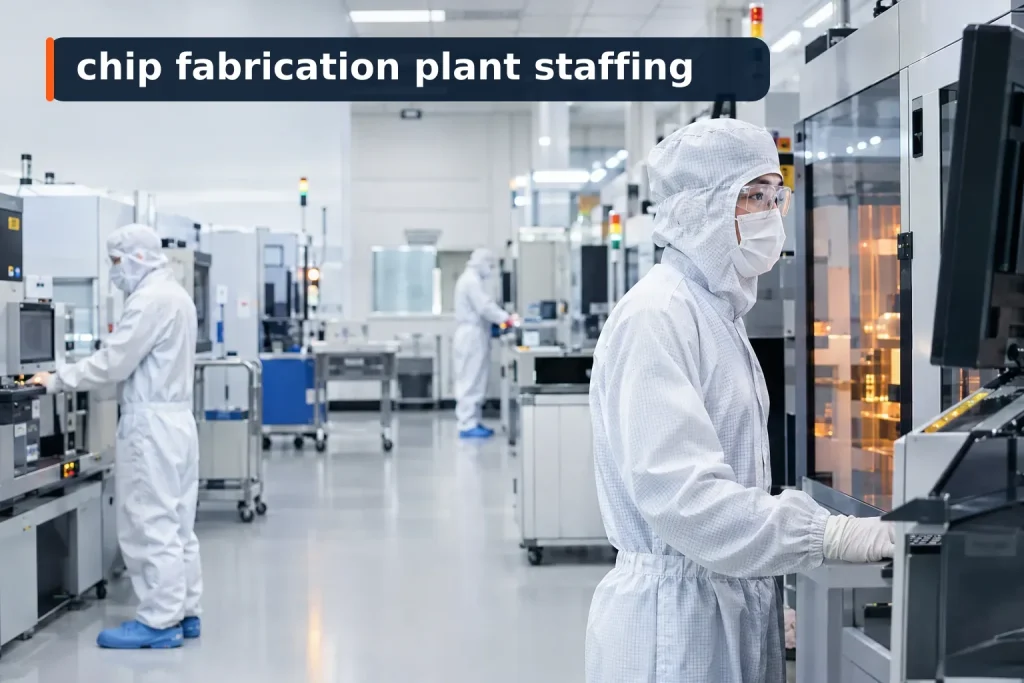
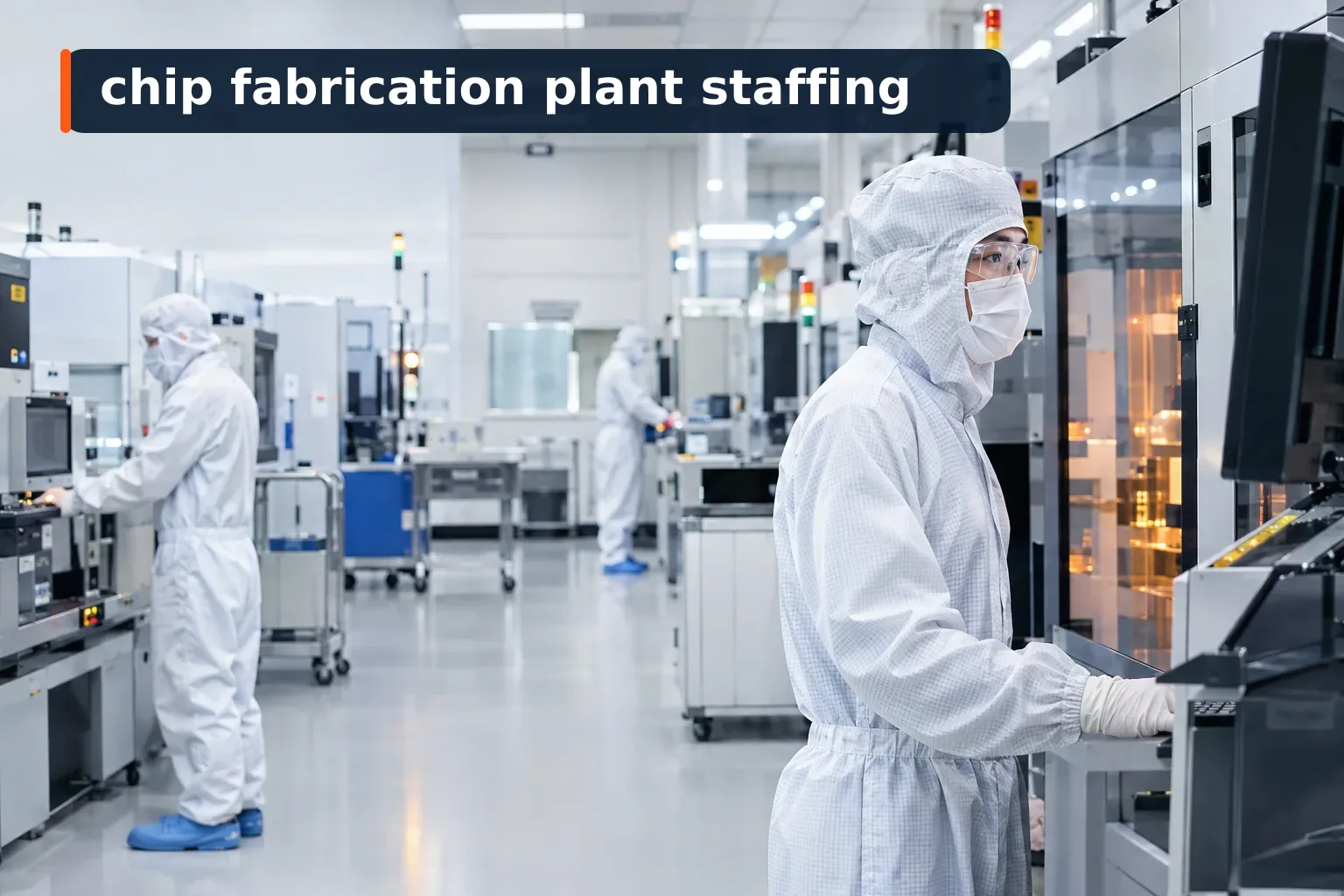
Staffing a fab isn't like staffing a general warehouse or assembly line. Candidates need to be cleanroom-ready, understand gowning and contamination-control protocols, and be comfortable working around ESD-sensitive equipment and hazardous materials handling. Many roles — process technicians, equipment maintenance techs, yield engineers — require hands-on familiarity with tools like photolithography, etch, deposition, or metrology systems that take real ramp time to master.
Most fabs also run 24/7 production, which means staffing has to cover multiple shifts without compromising on skill level for any of them. Add to that intensifying competition for the same talent pool as more fabs come online, and it becomes clear why a generalist recruiting vendor often struggles here. Engineering and technical hiring managers frequently describe receiving mismatched candidate submissions from agencies that don't understand the difference between a process engineer and a manufacturing engineer, or between a contract technician and a direct-hire equipment specialist — submissions that waste interview cycles and stall project timelines.
Semiconductor production environments simply demand a recruiting partner who speaks the technical language of the fab floor.
The Real Cost of Getting Chip Manufacturing Plant Staffing Wrong
When staffing for a chip manufacturing plant misses the mark, the costs go well beyond a bad hire. An undertrained technician on a cleanroom floor can introduce contamination risk. A mismatched engineer can slow down a yield-improvement project. A poorly vetted contract worker can create safety or compliance exposure on a production line that never stops.
For HR and Talent Acquisition managers, the more common — and more expensive — problem is reactive, fragmented hiring: scrambling to fill open requisitions during a demand spike, juggling multiple vendors with inconsistent quality, and re-running searches because the first round of candidates wasn't technically qualified. For VPs of Operations, slow fill times or persistent underperformance from a current staffing vendor directly threaten production schedules and headcount planning tied to new lines or expansions.
The pattern is consistent: when a staffing partner doesn't specialize in semiconductor manufacturing, the client absorbs the cost in delays, rework, and turnover — not the vendor.
What Specialized Staffing for a Chip Manufacturing Plant Looks Like
Solving the semiconductor talent shortage isn't about one hiring model — it's about matching the right engagement type to the role and the timeline. A specialized chip fabrication plant staffing partner should be able to flex across all three of the following.
Direct Hire Recruitment for Critical Fab Roles
For process engineers, equipment specialists, quality leads, and other roles where long-term retention and deep institutional knowledge matter most, direct hire recruitment is the right model. This is where a recruiter's ability to evaluate real technical fit — not just keyword matches on a resume — has the biggest impact on whether a candidate stays and performs.
Temporary & Contract Staffing for Production Surges
Chip manufacturing volume rarely moves in a straight line. When a demand spike hits, temporary and contract staffing lets a fab add qualified operators, inspectors, and technicians quickly, without committing to permanent headcount before demand is confirmed. This model is especially valuable for seasonal ramps, new product introductions, or interim coverage while a direct-hire search is underway.
Rapid Ramp-Up Teams for New Lines and Expansions
New fab lines and facility expansions create a different kind of pressure: a large volume of technical roles that all need to be filled on a compressed timeline. Rapid ramp-up staffing is built for exactly this scenario — coordinated, high-volume recruiting that gets a new line staffed and running without the bottlenecks that come from running the process through a single generalist recruiter or an overloaded internal HR team.
How EPIQORE Matches Talent to Chip Fabrication and Manufacturing Roles
EPIQORE built its recruiting process around one goal: every candidate submitted to a hiring manager should already be a strong technical fit. Every candidate for a chip fabrication or manufacturing role is reviewed twice before submission — once by the Recruiter and once by the Account Manager — and only candidates who meet a 90%+ match against the job description move forward. That two-person review is designed to eliminate the mismatched submissions that generalist agencies are known for.
This approach is backed by results in the sector: EPIQORE has supported IDEC Corporation for more than 10 years, and placed more than 100 technical employees at Quanergy Systems Inc. over an 8-year partnership. Across all industries, EPIQORE has delivered 1,000+ successful hires and placements for 50+ clients.
For contract and temporary staff placed on a fab floor, workforce support continues after the hire — including weekly payroll processing with Thursday direct deposit, backed by a 99.9% payroll accuracy rate and 100% invoice accuracy, so operations leaders aren't managing payroll administration on top of production schedules. EPIQORE works as an embedded extension of the client's team rather than a transactional vendor, which matters most when a search touches specialized functions like semiconductor manufacturing engineering — though EPIQORE's recruiting expertise extends across a broad range of industries and job functions beyond the fab floor.
Choosing a Staffing Partner for Your Fab or Plant
When evaluating a staffing partner to solve chip fabrication plant staffing needs, weigh these criteria:
- Industry expertise: Can the recruiter distinguish between a process technician, a manufacturing engineer, and an equipment maintenance specialist — or will you get generic industrial submissions?
- Speed without shortcuts: Fast fill times matter, but only if candidates are still passing a real technical screen. Ask how submissions are qualified before they reach you.
- Flexible engagement models: A partner should offer direct hire, temporary/contract, and rapid ramp-up support under one relationship, not force every role into the same model.
- Compliance readiness: Confirm the vendor understands the safety, gowning, and workplace requirements specific to cleanroom and production environments.
- Transparent terms: Understand exactly what's covered. EPIQORE's direct-hire placements include a 90-day performance guarantee, prorated at 1/90th of the placement fee per day, which applies when a placed candidate is let go for job-performance reasons — it does not cover layoffs or headcount reductions, and there is no guarantee on temporary or contract placements. A partner who is upfront about these terms is one you can plan around.
- Long-term partnership orientation: Look for evidence of multi-year client relationships rather than one-off transactional fills.
A partner that meets all six criteria is positioned to actually close your talent gap — not just fill a requisition.
Get Ahead of the Semiconductor Talent Gap
The semiconductor talent shortage isn't resolving on its own, and generalist staffing vendors aren't built to solve it. Whether you need a direct-hire process engineer, contract technicians for a production surge, or a coordinated team to ramp up a new line, the right chip fabrication plant staffing partner can be the difference between hitting your production timeline and falling behind it.
EPIQORE's recruiters and account managers specialize in matching technically qualified talent to semiconductor and manufacturing roles, backed by a review process built to protect candidate quality at every stage.
Related resources
Frequently asked questions
What is causing the semiconductor talent shortage?
A wave of new and expanding fab facilities has increased demand for specialized roles like process engineers, equipment technicians, and quality inspectors, while the pool of workers with cleanroom and semiconductor-specific experience hasn't grown at the same pace, creating a persistent semiconductor talent gap.
How is chip fabrication plant staffing different from general manufacturing staffing?
Fab roles typically require cleanroom certification, ESD-safe handling practices, and hands-on familiarity with specialized equipment such as photolithography, etch, or deposition tools. A staffing partner needs technical knowledge of these processes to submit genuinely qualified candidates rather than generic industrial talent.
Does EPIQORE offer both temporary and direct-hire staffing for chip manufacturing plants?
Yes. EPIQORE supports chip fabrication and manufacturing plants with direct hire recruitment, temporary and contract staffing, and rapid ramp-up teams for new lines or expansions, so the engagement model can match the role and timeline.
Is there a guarantee on staffing placements?
EPIQORE's direct-hire placements include a 90-day guarantee, prorated at 1/90th of the placement fee per day, that applies if a placed candidate is let go for job-performance reasons; it does not cover layoffs or headcount reductions. There is no guarantee on temporary or contract placements.
What roles can a specialized staffing partner fill at a fab?
Common roles include process and manufacturing engineers, equipment maintenance technicians, quality and yield engineers, production operators, and technical support staff — across both permanent and contract engagements.
Next step
Talk to a Recruiting Expert about your chip fabrication plant staffing needs